
Peak periods and what you can do to help ease pressure on the grid
In the context of the energy transition, electricity is an increasingly precious resource. Smart energy use habits, especially during periods of high demand, is key to maintaining balance in the grid and making sure that Quebecers have sustainable access to electricity.

What's a peak period?
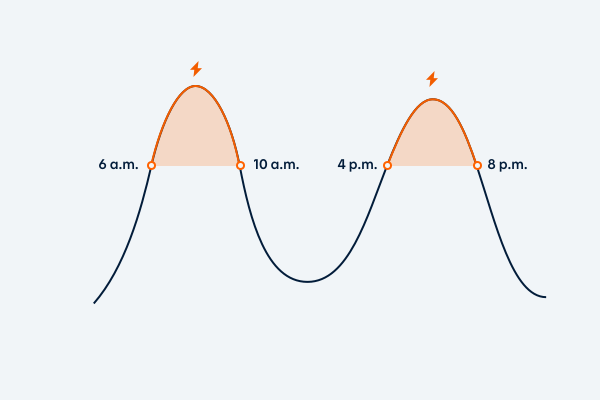
Peak periods occur when we're all using electricity at the same time, when our daily routines lead to high demand: in the morning and the late afternoon and evening.
In winter, the peaks are more intense because most Quebecers heat with electricity. On the coldest days, that puts significant pressure on the grid.
To see how peak periods affect the grid, you can check power demand data in real time.


Video: Winter Peaks

Examples and simple analogies make it easy to understand how winter peaks affect our grid and why it's essential to adopt the right habits.
Running time: 1 minute 47 seconds
Peak demand events
In winter, particularly on the coldest days, the power grid can be under significant pressure. Hydro‑Québec may ask its customers to use less electricity at specific times during what we call peak demand events.
- There may be up to 30 peak demand events each winter, from December 1 to March 31 between 6 and 10 a.m. and 4 and 8 p.m.
- To participate in peak demand events and save up to 20% on your winter electricity bill, sign up for Rate Flex D.
Small changes make a big difference
By rethinking when we use electricity and taking simple actions, we can ease pressure on the grid.
-

Heating
Turn down the heat by at least 2°C at the start of a peak period.
-

Hot water
Use hot water outside peak hours whenever you can.
-

Appliances
Wait until the peak has passed to use major appliances like the dryer and dishwasher.
-

Electric vehicle
Opt to charge your EV during the night whenever you can.

Keep it simple: Install smart thermostats for $0
With smart thermostats now at $0 including installation*, Hilo automatically reduces your electricity use during peak demand events and helps you maximize your savings.
*Conditions apply.
Why use less electricity during peak periods?
When you use less electricity during peak periods, you help limit demand. Hydro‑Québec can then avoid (or defer) the additional costs of:
- purchasing electricity at higher prices from neighbouring systems
- installing new equipment in existing generating stations
- building new electrical facilities
Being energy wise means doing our part to make the grid more stable and sustainable and build a green energy future.
We all have a part to play
Québec still relies on fuels that emit GHGs. It's essential to use energy more wisely and replace fossil fuels with clean energy. We all have a part to play!
Running time: 1 minute 32 seconds
Read also
-

What happens when electricity use exceeds the grid’s capacity?
Consumption 1015 minutes -

Guide to saving during winter peaks
Save money and energy4 minutes -

Peak demand events: Savings in every room
Save money and energy4 minutes -

Energy consumption: Are companies taking the lead?
Energy transition4 minute